For someone like me, whose early childhood in Indonesia was one without television or even radio programmes for children, books were my only window to other worlds and adventures.
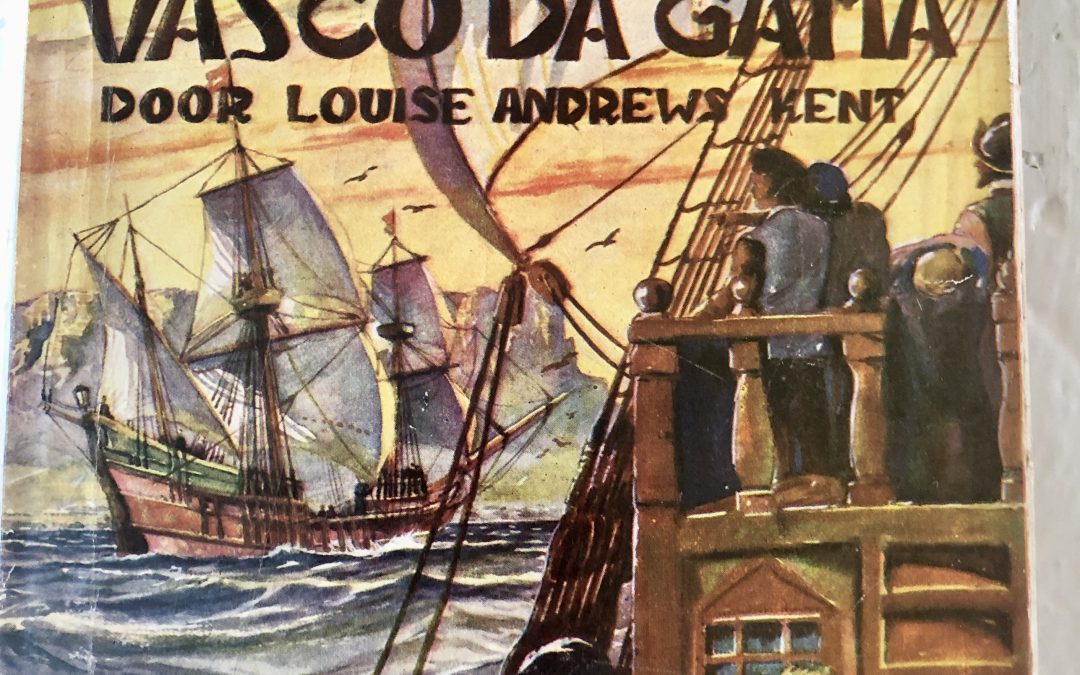
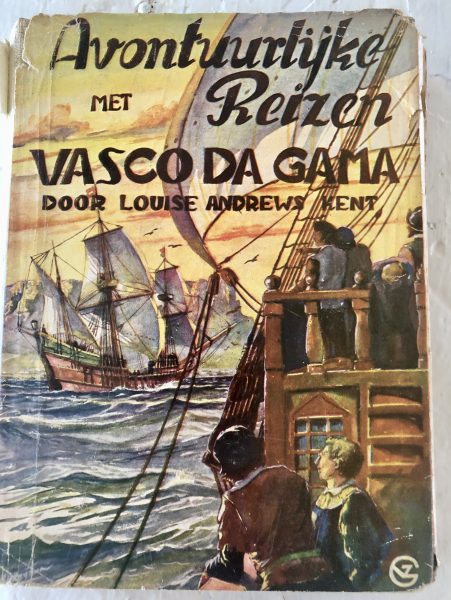
What books did I read as a child? This was one of my favorite Dutch books.
The books that I read in my early childhood were books in Dutch and somewhat later in Indonesian.
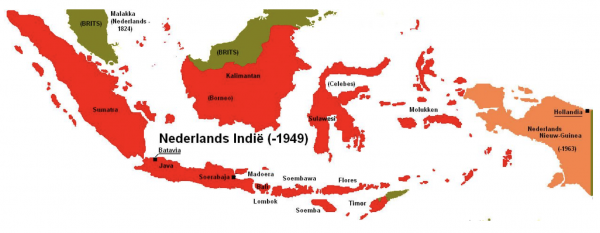
Dutch East Indies – Image Ronny Geenan https://myindoworld.com/indonesia-and-the-dutch-east-indies/
I was particularly enthralled by books that described the adventures of the Dutch as they sailed from Holland to Dutch East India (Indonesia).
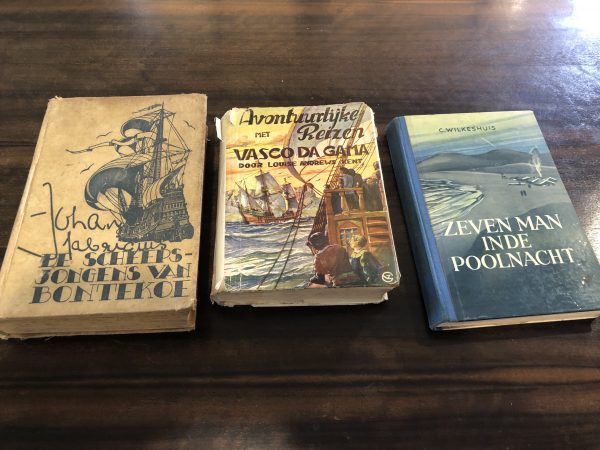
One such book was about Captain Bontekoe and his ship which sailed around the Cape of Good Hope into the Indian Ocean and was shipwrecked on the island of Sumatra. The ship’s crew then continued their journey overland through the length of Sumatra to eventually end up in Batavia (Jakarta) which had been their destination. Along the way, through Sumatra, they had to evade hostile locals and ferocious animals such as the Sumatran tiger.
Another one was the book “Vuuren op de Bergen” (Fires on the Mountains) which was a story about how some Dutch seamen who had deserted their ship had turned against the Dutch colonial authorities and had teamed up with some local Indonesians. Warfare ensued between the two sides. The rebels communicated with each other by lighting fires on the mountains, hence the title of the book.
There were numerous other books, the types that appealed to young boys like myself. Books such as “Around the World in 80 days”, “Seven men in the Polar Night”, “Adventurous trips with Vasco de Gama”, “Ketelbinkie” (a story about a young boy working on a cargo ship that sailed between Holland and South America – and how there was a murder on board during one of the trips).
What books did I read as a child? These Dutch books.
I liked nothing better than to lie in bed and read a book whilst eating bread (no butter or anything else on it). I could read for hours like that and eat a loaf of bread at the same time.
Towards the end of our time in Jakarta the Dutch influence had waned and the Dutch schools, including mine, had been closed and most of the Dutch had left.
It was around these last few years that I started reading Indonesian books because by then I had read and re-read my Dutch ones and could not get hold of any other ones.
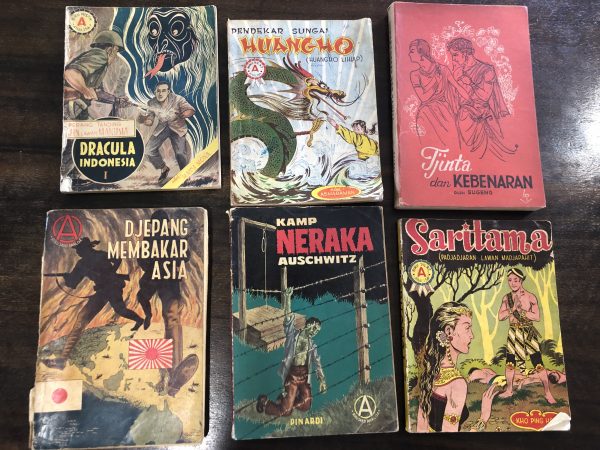
The Indonesian books that I read varied from World War II books to books about Indonesian tales and mysteries and even Chinese dragon slaying.
What books did I read as a child? These Indonesian books.
These books were low-cost productions and could be read in one session. They were good entertainment.
Once I arrived in Brisbane, my book reading habits were challenged!
I did not speak English, so I could not read any available books. Luckily for me, my English teacher at Cavendish Road State High School advised me to start reading comic books and proceed on to bigger and better things as my knowledge of English picked up.
So, off to the council library at Stones Corner, I went and using mainly sign language borrowed a few of the comic books. This went on for a little while until I felt that I could plunge into some deeper water and try to read more complex books. However, I used to find that having a few pictures or maps in a book made a welcome change from endless pages of just typescript.
The books that fitted this formula were usually biographies of famous people. Needless to say that these types of books were my stepping stone to being fully conversant with the English language as well as expanding my general knowledge.
It also enabled me to substantially bypass learning the English grammar rules since the reading of numerous books gave me an instinctive feel for the language without the more regimented and stilted way that people speak a language purely based on knowing the grammatical rules.
When I think about it, although I do not have a deep understanding of the grammatical rules of any of the languages that I know, I write and speak using correct grammar.
That brings us inevitably to Russian books.
Well, when I lived in Jakarta my grandmother had taught me how to read and write in Russian and we spoke Russian at home. My parents had many Russian books, mainly the classics.
I used to read some articles from a Russian magazine called “Around the World” which was somewhat similar to National Geographic.
Then when I arrived in Brisbane it was full steam ahead learning English and little or no time to read any Russian books. The classics were too large a project to take on and there were no lighter novels available.
It has only been during my working life that I started reading books in Russian. One of the first was Solzhenitsyn’s “The Gulag Archipelago”.
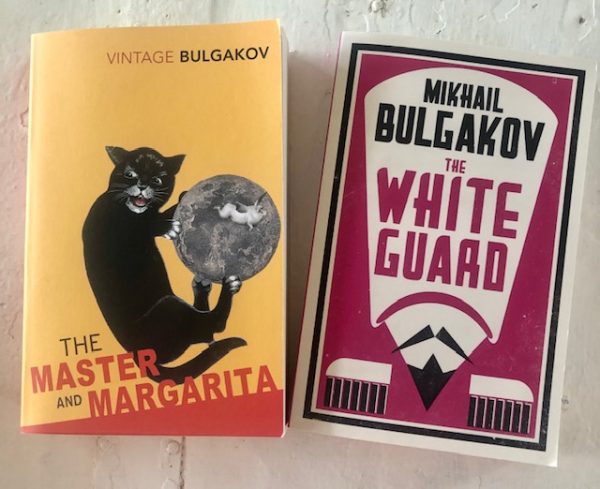
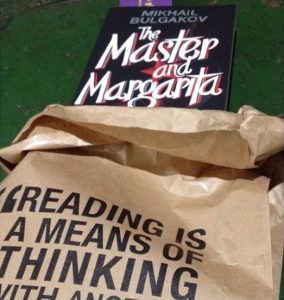
Since then and especially as part of my writing about my father’s history, I have read numerous books in Russian as part of the research for my book, not to mention Bulgakov’s “Master and Margarita”, “The Heart of a Dog”, “The White Guard”.
What books did I read as a child? Later I read Bulgakov. Here are a couple of favourites in my library.
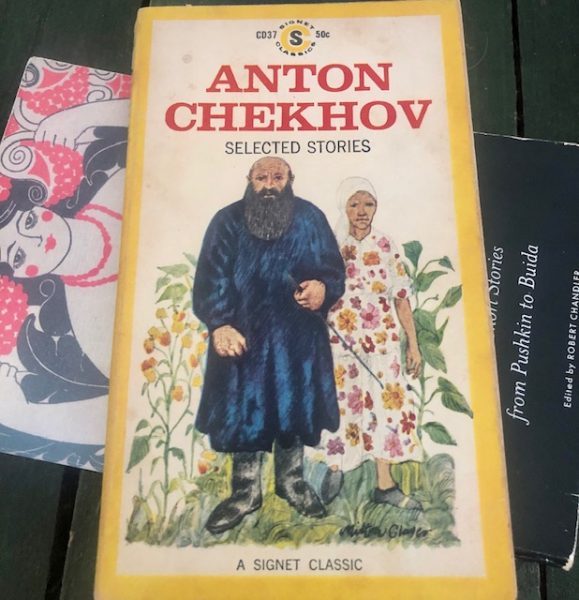
But still not the great classics by Chekov and Tolstoy – my next big task. Maybe childhood and book reading never ends!
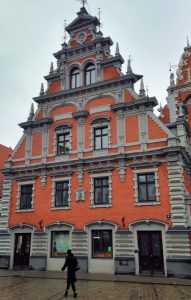
Riga, a place that until recently had been a place somewhere, not quite sure where.
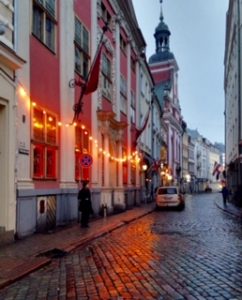
And all of a sudden due to force of circumstance and a love of travel, we had just booked into an Airbnb in the main street of Riga.
1. Getting there
The journey to Riga had not been smooth sailing! We had caught a train from Tallinn to the border with Latvia and then found out that there were no connecting trains or buses, at least not for the next 15 hours to Latvia and to Riga in particular.
So we caught a taxi, for the princely sum of 100 euros from the border to Riga. The taxi driver encapsulated the dichotomy of the present day Baltic republics.
The taxi driver, a Russian, who drove us there, was entertaining as he described life from his point of view, life for Russians in the present day reality of the independent Baltic States. It all sounded a bit like the Russians were more likely to be struggling in the new reality of life in the Baltic States!
2. Staying there
The modern, recently refurbished apartment in Riga was situated on the top floor of an old six-storey apartment building with a 1930’s era lift with manually operated closing doors that could knock you out if you didn’t jump out of the way quickly enough. The apartment was great; not only was there a spa bath, but big comfy sofas to curl up on and read and take it easy.
It was then that we realised that our stay in Riga was to be not just not another stop over. It was a brush with history, and a brush with the more violent and tragic part of history at that.
Our street, Brivibas (Freedom) Street was previously Lenin Street and before that Adolf Hitler Street and before that who knows!
Two bloodthirsty dictators and a post-communist regime had left their imprimatur on the street name and many other things!
3. The characters there
In amongst all this present day Baltic anti-Russian feeling, we meet Svetlana, one of the nearly 40% of the population that is Russian still living in the Baltic States. Svetlana is more Russian than most Russians are. Svetlana an actress, hosts the Russian programme “Radio Riga”, is the chairwoman of the local PushkinSociety and the main sustaining members of the “Society for the Restoration of the Pokrovskaya Cemetry” located not far from the centre of Riga and at one time considered “the place to be buried” in the Russian Empire.
Svetlana’s life and personality is so rich that it would have seen her in one of Pushkin’s poems, had he known her. She is full of energy and drive, in touch with Russian literature and history, loves straight vodka shots, and has a keen eye for men. A true Russian woman and a connoisseur of the finer things in life.
4. Away from the main square there
She takes us to visit the Cemetery along a street made famous, she says, by Mikhail Bulgakov in his book “The Master and Margarita”. Bulgakov was an author writing un-Soviet literary works in the days of Stalin, a not very promising literary career or for that matter, life expectancy for those times. Luckily for him he finished writing it just before he died, thereby cheating the firing squad.
Unexpectedly, his book saw the light of day in Western Europe in the 1960’s when Marianne Faithfull gave it to Mick Jagger. Jagger was so inspired that he wrote his very famous song “Sympathy for the devil” based upon it.
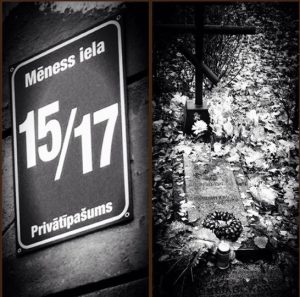
In the book, “The Master and Margarita” the locals say Margarita, the witch, at one point travels along the street leading to the cemetery, today called Meness Street, which means Moonlight Street, to meet her friends at the cemetery.
A strange feeling overcomes you when you are walking along the very same street to the very same cemetery to make your acquaintance with one of your ancestors. It is as if you are going back in time as a character in Bulgakov’s story.
5. The fame of Meness Street there
Meness Street, for all its literary noteworthiness, is unremarkable. But its destination, the cemetery, is certainly something to behold. A home away from home to be proud of! Steeped in history and populated by famous and accomplished personages who are buried there, it would certainly be a place where one would be honoured to be laid to rest.
In a way, it is like a tidal pool on the beach that still has some water in it when the rest of the tide of history has receded. Bulgakov’s fingerprint is here too. His wife’s twin sister is buried there, as are famous Russian authors, artists and statesmen. Stories abound about its famous people: the Russian author Mintslov who insisted upon being lowered into his grave through a web of pine tree branches with his final instruction to do it as “I will be watching you”; one of the last Metropolitans of the Russian Orthodox Church, tragically killed and whose remains are buried in the ornate chapel. So the story goes, when his body was exhumed a number of years after being initially buried in a grave, to be transferred to the dedicated Chapel, none of his body parts had disintegrates. A sign of saintliness and holiness!
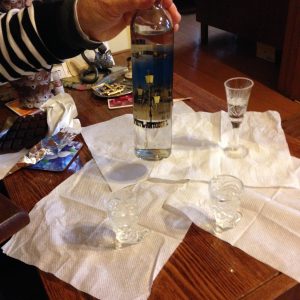
And so as we extricate ourselves from the time travel that the excursion to the Cemetery represents, drink vodka with Svetlana and wander off through the back streets to the huge markets adjacent to the old wharves. The exoticness is captivating and mouth-watering at the same time. Fish from the Baltic, caviar, sausages and meats that are worth sacrificing your health for, are a must.
All in all, Riga and for that matter the Baltic States of Estonia, Latvia and Lithuania are priceless gems that should definitely be on everyone’s to-do list.
Whether overlooking Tallinn in Estonia, whilst munching on their speciality of almonds roasted with sugar, cinnamon and cloves in a red-hot brazier by the side of the street or having breakfast for two for six euros in Vilnius in Lithuania, these countries are a must to visit.
On a cold, blustery late autumn day, I am on the shore of a body of water, probably part of the harbour or river, in Vyborg. A place that I had never imagined that I would ever visit until, whilst in St Petersburg, I received an invitation to come to Vyborg to do a book presentation about Sergei Mintslov.
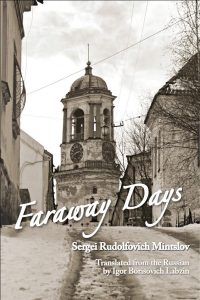
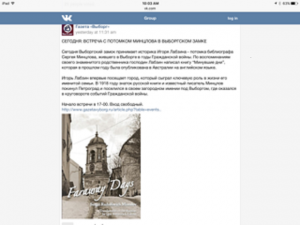
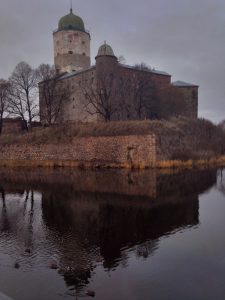
Together with Michail Efimov, Julia Moshnik and my wife Jay, we walk toward the medieval castle that seems to be far away, when our attention is drawn in a direction that neither of us had thought of looking towards. Then we see the reason for the excitement of our hosts. It is the Clock tower that features on the cover of my translation of Faraway Days, by Sergei Mintslov, my grand uncle’s book.
English Translation of Faraway Days by Igor Labzin
We both stop in our tracks, staring unbelievingly at the structure, which hitherto had been nothing more than a photograph on the front of my book. Vyborg was until then just a name on a map.
So why Vyborg, a city in Russia, not far from the Russian Finnish border?
This is where my grand uncle, Sergei Mintslov, who wrote Faraway Days back during the early days of the Russian Revolution, comes into the picture. You see, he wrote it in on his estate in Kamere, which these days, is an outlying suburb of Vyborg.
The couple, Michail and Julia, that have met us at the railway station and who are now escorting us, via a walk around the old part of Vyborg to the 13th century Castle that is now a museum, are a husband and wife team of local historians who have a keen interest in Sergei Mintslov.
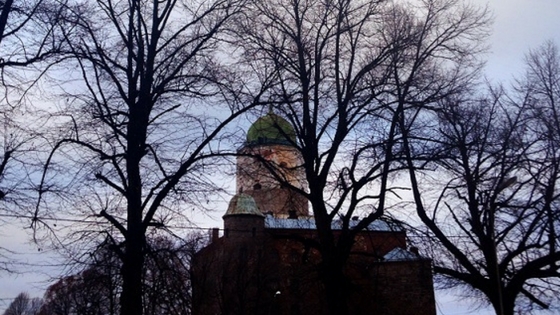
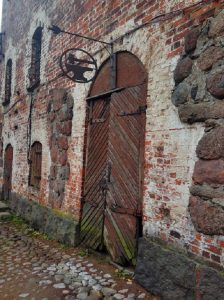
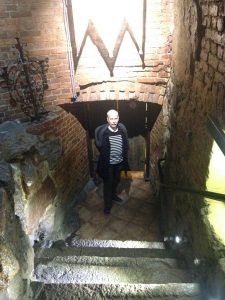
Inside the walls of Vyborg’s Medieval Castle
Vyborg Castle Museum
After a quick orientation tour of the city centre with them, we arrive at the Castle and warm up over a cup of tea with biscuits, before taking a close up look around the back corridors, rooms and staircases of the castle. It is the first ever experience for both of us to be able to see at such close quarters the inside of a castle, rather than the usual few rooms that are made available for viewing by tourists.
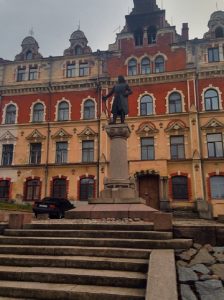
This castle has not yet been totally refurbished and “polished up” so as to become part of the global tourist track. Its floors and walls still show the wear and tear of the many years of service as a fortress manned by soldiers. We are then left to our own devices for a few hours before the commencement of the presentation of my book, Faraway Days, in the main hall of the castle that evening. Probably the very same room where in days of old, the Swedish and Teutonic knights would while away the night prior to setting off for a battle in the morning. Vyborg certainly has a lot of history behind it. Founded by the Swedes in 1293 by Torkel Knutsson, whose statue still stands in the main square, it changed hands numerous times between the Swedes and the Russians and between Russia and Finland in the period of the Russian Revolution and the end of World War II.
Statue of Knutsson in Vyborg
Mon Repos
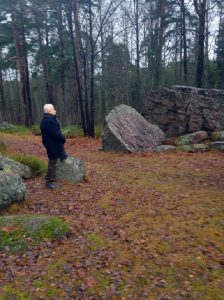
We wander off to Mon Repos park, a good half hour walk from the city centre. It is considered to be one of the jewels in the crown of the city. The land was bought by Ludwig Heinrich von Nicolai in 1788 and remained in the family until 1943, when Soviet Russia retook Vyborg. Mon Repos, on a cold autumn day is somewhat daunting but fascinating with its autumn colours, piles of chopped wood, old tumble-down timber buildings and lichen and moss covered tree trunks. It is the very epitome of not only Russia but also of northern Europe. Its large rock outcrops are a rarity in this part of the world and are much admired by the locals who flock to the park in summer.
Mon Repos rock garden
Slavjanskaja Trapeza Restaurant, Vyborg
Having had as much cold fresh air as our bodies could stand, we seek shelter in a bistro recommended by Michail and Julia, the couple that met us at the railway station. It is fantastic!
The Slavjanskaja Trapeza restaurant is located in a basement carved out of stone in the old part of town. Crouching slightly so as not to hit our heads on the low stone ceilings, and having been at first mistaken for Finnish tourists, but then feted for coming all the way from Australia, we settle into a real Russian culinary journey of fish soup, grilled salmon and of course, to keep a grip on reality, a plate of potato chips.
All this quaffed down with a bit of the local beer, and tea, but not too much, as we have to keep our wits about us for the evening presentation. It’s top notch.
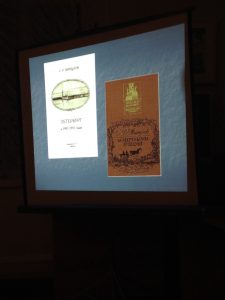
Books by Sergei Mintslov
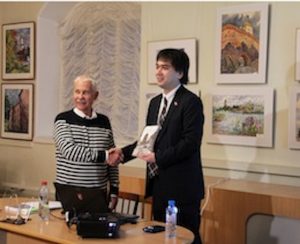
My presentation on Sergei Mintslov starts with great promise and proceeds to get better and better as the event proceeds. The director of the museum, Vladimir Tsoy, just like all his colleagues, has no air of stuffiness about him. Au contraire, they are young, smart and energetic! An absolute delight to be in their turbo-charged atmosphere, juxtaposed with the 13th Century Castle in which they work.
The Director of the Castle Museum
The locals have also turned out in force for the presentation, the local Vyborg Times, the Local TV station and all the Mintslov aficionados of the district, including a local scholar, Michail Kostolomov, who is a recognised scholar of all things Mintslov, including Mintslov’s eccentric, as some would have it, sister Anna.
Article in the Vyborg Gazette November 2015
Following the end of the presentation and interviews with the local media, we walk the quiet streets along the river, under the streetlights, to the railway station with Michail and Julia. On the train, which travels at speeds of up to 150 km per hour, we arrive in St Petersburg an hour or so later.
Back in our hotel room just off Nevsky Prospect, we are both dazed, not only with the rapidity of the day’s events but also with the discovery of an unknown part of the world and its attendant history that was hitherto unknown to us.
A day never to forget and always to cherish!
Babushka has moved into a nursing home and you don’t know what to do with all of her beautiful old Russian memorabilia, books and mementos. They are family treasures and you don’t want to throw them out but then again it takes up room to store it and anyway you cannot read Russian so what’s next. It starts to feel like a fine line between fascination and ordeal.
Who is interested? The Dom is. That’s The Dom Russkovo Zarubezhya (Foundation of Russians Abroad) in Moscow – interested in tokens from the 20th century especially of Russian émigrés who left Russia to make new lives in other countries.
Rummage through the boxes and here is what you may find.
Old letters and documents in Russian dating back to 1917
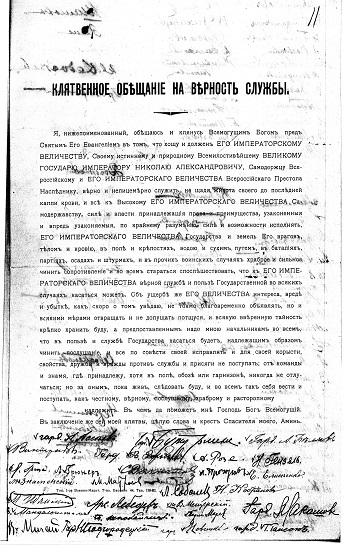
This piece of memorabilia lists the names of the young officers who were graduating from the St Petersburg Naval Academy, who swore their oath of allegiance to Tsar Nicholas II prior to the outbreak of the revolution.
Oath of Allegiance
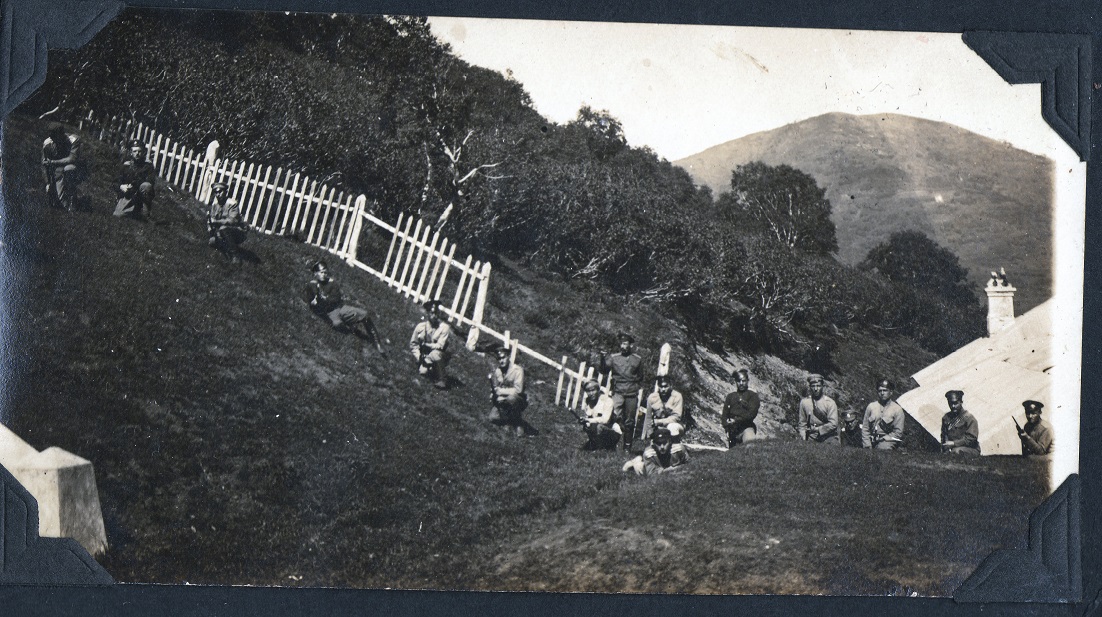
Dusty stained photo albums with precious photos falling out of the stick on “corners” on the black pages. If you are lucky, there in faded pencil on the back, are the names of those in the photo. Sometimes there is the year and sometimes a precious comment to reveal a snippet of a story around the pic. This one is of the White Officers on manoeuvres in Eastern Russia in 1922.
On manoeuvres on the Kamchatka Peninsula, Far East Russia, circa 1922
Valued Russian Books
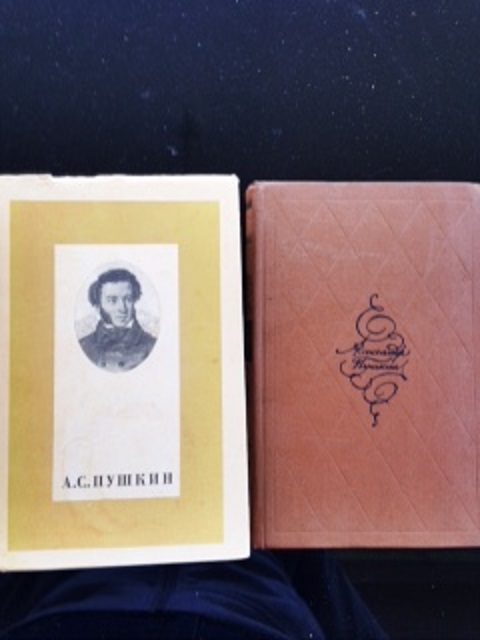
Books ranging from St Petersburg Naval Academy text books to the classics of Tolstoy, Pushkin and Chekhov to cookbooks with the foreword written by Stalin. The covers may be tatty and discoloured, the pages dog-eared but they evoke the culture of the era of the silver age of Russian literature.
Pure Vintage Clothes
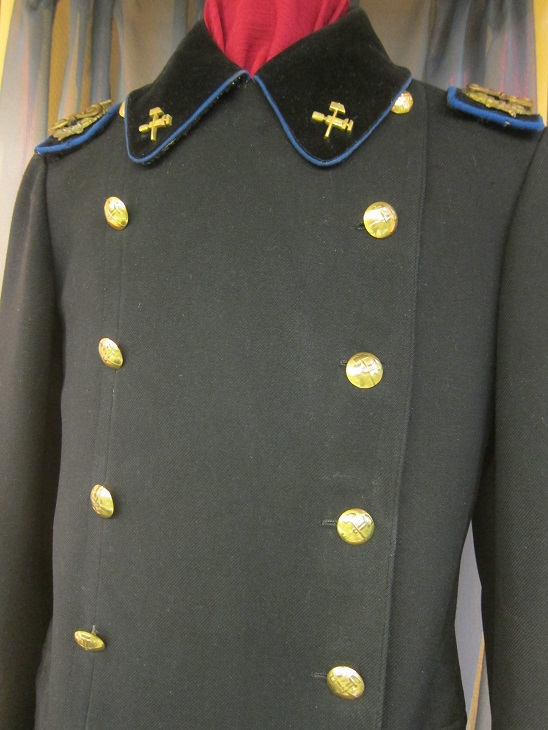
Yes the op shops would love the old suits and dresses, maybe a slightly squashed hat or two but definitely the gloves, the bowties and cigarette cases evoke memories of the glamorous 30s and 40s. There may be pieces of old military uniforms or the cap and epaulettes of the ship captain or his pipes and ashtrays all memorabilia jumbled together in the leather hat box with the stickers of voyage destinations many years ago.
Sea Trunks full of Collectibles
Open them up and dig around through some old blankets and newspapers wrapped around things. What are they? The sexton in another box of its own; stained leather binoculars; old worn tobacco tins.
What’s next?
What does the Dom do with these pieces of Russian memorabilia and why are they interested?
Their work is concentrated on the preservation of Russian culture and history of Russian émigrés through research and documentation, presentations and displays of aspects of life prior to and after the Russian Revolution and tracking the stories of White Russians who fled from Russia in the 20th century. What happened to these people? What are their stories? That is why your babushka’s keepsakes may be of great interest to them.
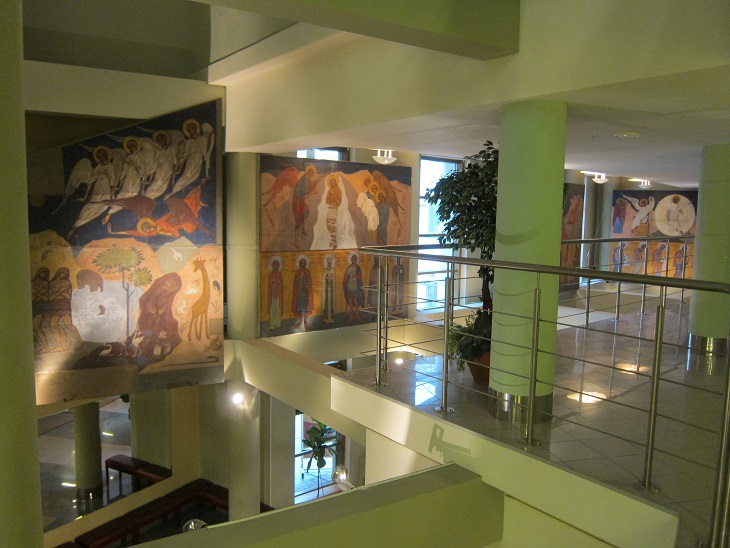
You can visit the library and gallery at the Dom, view special displays and their art gallery.