by admin | Sep 21, 2018 | Blog
Singapore – 50 years later
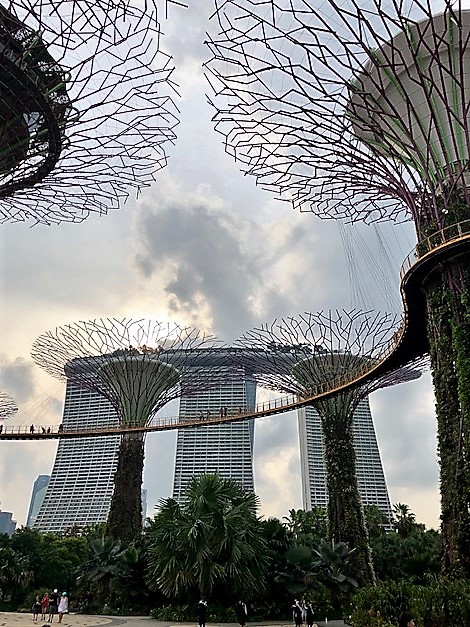
It has been 50 years or so since I walked the streets of this city. A city that I visited many times with my captain father, Boris Labzin when I was somewhere between 10 and 15 years old. It was so different, so sophisticated, so orderly back in the 1960’s compared to my hometown of Jakarta. And now there are gardens from the sea where once it was the waterfront.
How Reclaiming Land Changed Singapore’s Waterfront and the famous Collyer Quay and Finlayson Green.
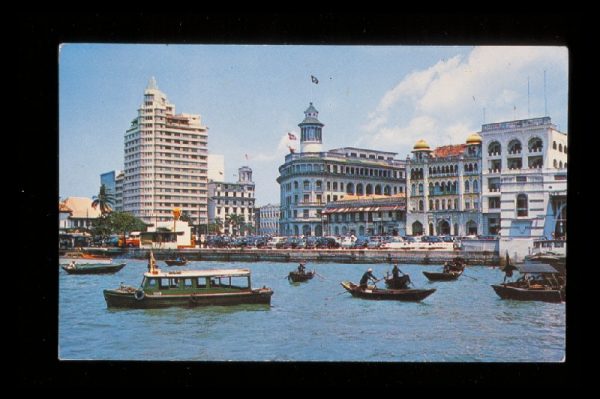
Collyer Quay 1960s – Image: Ghetto Singapore
My father’s ship used to ride at anchor in the harbour and to get on shore we had to hail a passing sampan who would take you to Collyer Quay. And lo and behold, as you climbed the steps from the sampan onto the quay, you entered a new world. One of curry puffs, pedestrian crossings, high-rise buildings with lifts – all unknown in Jakarta.
So, 50 years later, I am back in Singapore and I want to go to the very place that was the gateway to a new world for me, the corner of Collyer Quay and Finlayson Green (even those very English names evoke a sense of orderliness).
And I get my wish, here I am in the very spot that I used to be, but there is no water nearby, even though it is still called Collyer Quay. I mean what is a Quay without a waterfront.
I feel disoriented, surely this is the place, but where is my beloved waterfront, the one that has kept my memories alive for all these years!
Puzzled I leave the site of the mystery and upon my return home, I search through the old family documents for an explanation. I find it in a 1964 Singapore bus company’s brochure – a street map of the area and sure enough there is Collyer Quay – on the waterfront as it should be!
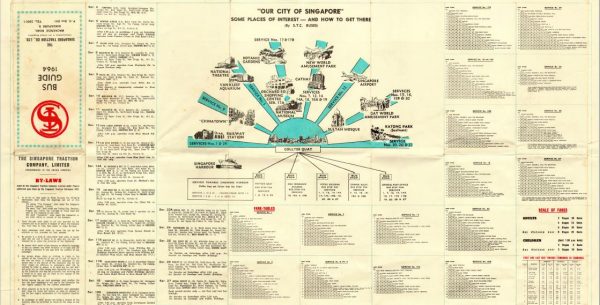
Curiously the bus company is called the Singapore Traction Company and it is an incorporated business in the UK – probably they were worried about Singapore at sometime no longer being a British Colony.
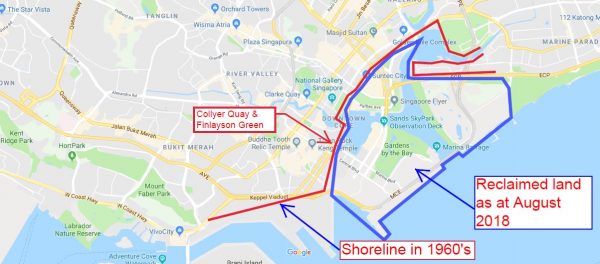
I then compare the 1964 street map with the current one and realise that there has been a whole lot of reclamation work that has occurred and indeed Collyer Quay is now a long way from the waterfront. Relief at the clarification and sadness at the changes that have occurred since my childhood flood my thoughts. You can’t stop progress – but don’t you hate it sometimes!
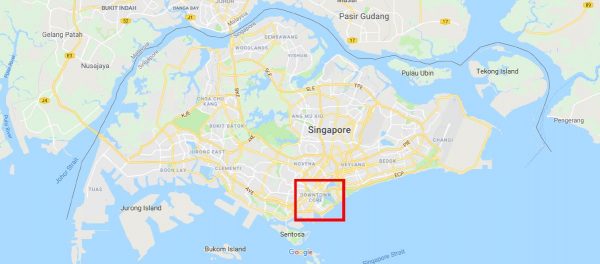
These diagrams show the extent of the reclamation and the before and after images of the fabled corner of Collyer Quay and Finlayson Green.
Maybe it is a challenge to revisit your childhood places as it is often so very different and brings into focus the inexorable flow of time.
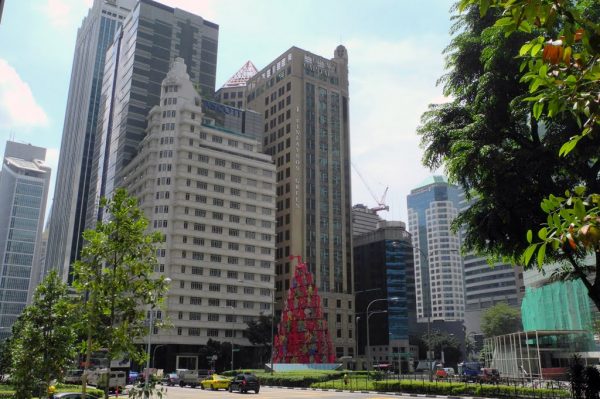
Finlayson Green 2018 – Image: John Muzi
by admin | Jun 5, 2018 | Blog
Who were the most influential characters that changed Russia forever and who met Death by Stalin as a result?
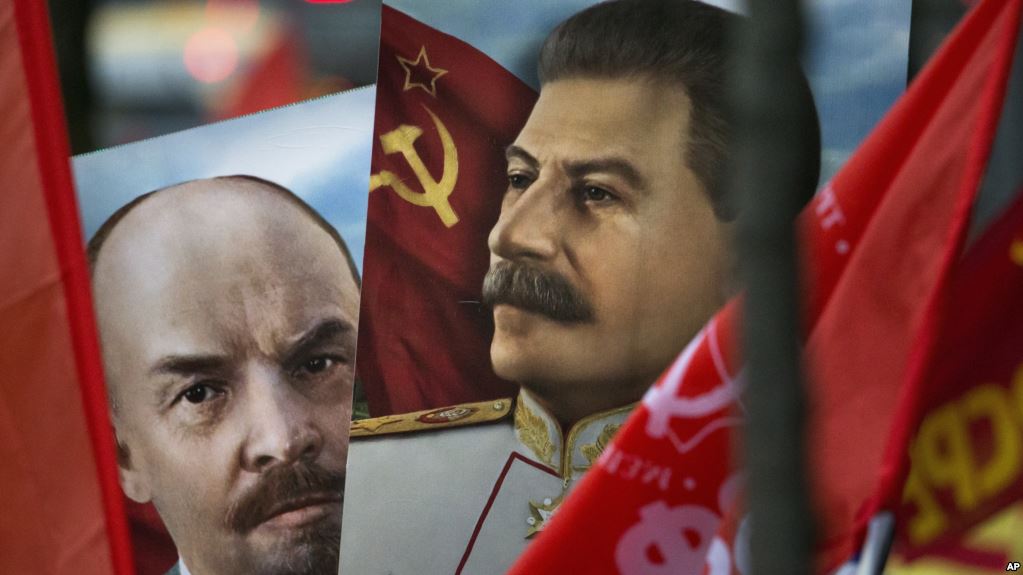
A hundred years ago, the Bolshevik government led by Vladimir Lenin was battling for survival. It seemed that the Whites were attacking from all sides and having success in doing so.
There was a White Army contingent advancing onto St Petersburg from the direction of Estonia, there was General Denikin in charge of the White Volunteer Army advancing from the south towards Moscow and there was Admiral Kolchak advancing from Siberia towards Moscow as well.
The Red Army, which had been hastily formed only a little less than a year previously, was ill disciplined, ill trained and ill equipped.
So one side looked like it had everything going for it and the other looked as if its time would be up soon.
As so often happens in history, things turn out differently to what would have been reasonably predicted.
The White Army
The Whites were confident of victory and pushed onto Moscow and St Petersburg as fast as they could, whilst the Bolsheviks, also known as the Reds, were in a state of near panic.
The Whites were, in a way, the victims of their own confidence. Their lines of supply were too stretched out, the Generals too self-indulgent!
The Red Army
The Reds on the other hand pulled out all stops to turn their situation around. Men with fresh ideas found a ready place in the Red Army. Men like Leon Trotsky (nee Bronstein) a Jew from southern Ukraine, Semyon Budyonny a cavalryman in the Russian Imperial Army, who having felt shunned there because of his family’s lack of social status meant that his prospects of promotion were limited, joined the Red Army and was instrumental in stopping Denikin’s advance to Moscow.
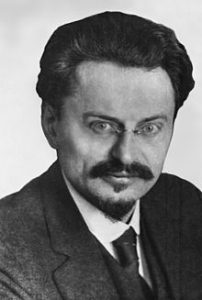 Trotsky turned the rabble Red Army into a formidable fighting machine and Budyonny continued to win battle after battle and was in time promoted to Marshall of the Soviet Union.
Meanwhile, another main player in the Bolshevik movement and the ensuing Civil War was Vasily Blyukher (later to be shot on the orders of Stalin in 1938), who was the commander of the Red Army when they stopped the White Army advance onto Blagoveshchensk in Eastern Siberia in 1921, in which Boris Labzin served on an armoured train called the Dimitry Donskoy. Then there were others such as Mikhail Tukhachevsky (later shot on the orders from Stalin in 1937), Alexander Yegorov also shot on the orders of Stalin in 1939 and Klement Voroshilov. All of whom in time reached the rank of Marshall of the Soviet Union except for Trotsky who was murdered in exile in far away Mexico by one of Stalin’s agents.
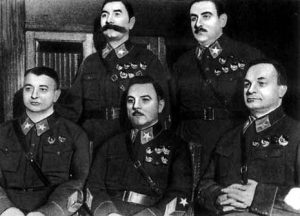 Left to right: Tukhachevsky, Budyonny,Voroshilov, Blyukher and Yegorov
On the other side of the ledger, there were the stand-out White Generals and Admirals.
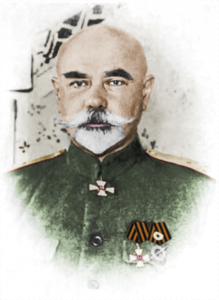 There was General Anton Denikin who never quite made it to Moscow, Admiral Kolchak who had all of Siberia in his hands but lost it to Tukhachevsky.
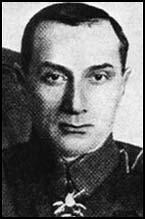 Baron Pyotr Wrangel, who was a courageous, dashing, brilliant cavalryman, led the White retreat to the Crimea and then organised a flotilla of 24 ships with their crews and 4,500 civilian refugees that sailed into exile, first to Turkey and then to Bizerte in Tunisia which was then under French rule.
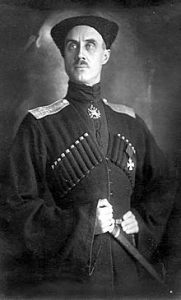
All of these White commanders went on to live in exile in Europe and the US for the remainder of their lives.
No rank of Marshall for them but on the flip side no death by Stalin either.
by admin | May 5, 2018 | Blog
Who were the Russian Boyars in the 10th century to the 17th century?
Princes by another name?
Russian Tsar Peter the Great, greatly influenced by his travels in Europe, daringly changed the antiquated Russian ruling systems one of them being the Boyars, changing their designations to the more Western royal titles of princes and dukes.
Now, with the approach of the 100 year anniversary of the execution of Tsar Nicholas and his family on the 17th July 1918, one tends to reflect on how such a spectacular and tragic demise of this family marked the end, not only of the 305 year old reign of the Romanov family, but in a broader sense the rule of the Boyars of Russia of whom the Romanovs were the most prominent and successful members.
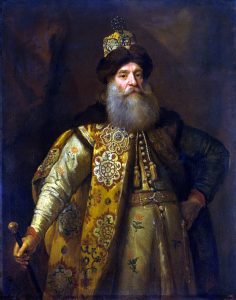
The Boyars (1682,_Hermitage)
Who were these people called The Boyars?
It all started with Rurik, a Viking prince, who established a number of principalities in what is present day Russia in 862 AD and whose lineage continued until it ended with the Tsardom of Russia and the ascension of the Romanovs in 1613.
Under the rule of the Rurikid princes, the Boyars emerged in the 11th century as the upper class of Russian medieval society with considerable political power in the first Russian Slavic state, Kievan Rus. In effect, they became the nobility and some of them became rulers of the various principalities established by Rurik and his successors.
What happened to the Boyar’s power throughout Russian history?
By the 15th century, the centre of power in Russia had moved from Kiev to the Grand Principality of Moscow (Muscovy) with the Boyars still in their position of power and effectively kingmakers.
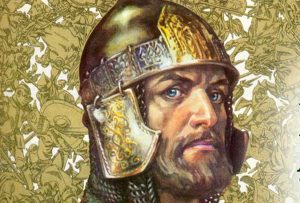 Alexander Nevsky of Russia, World History
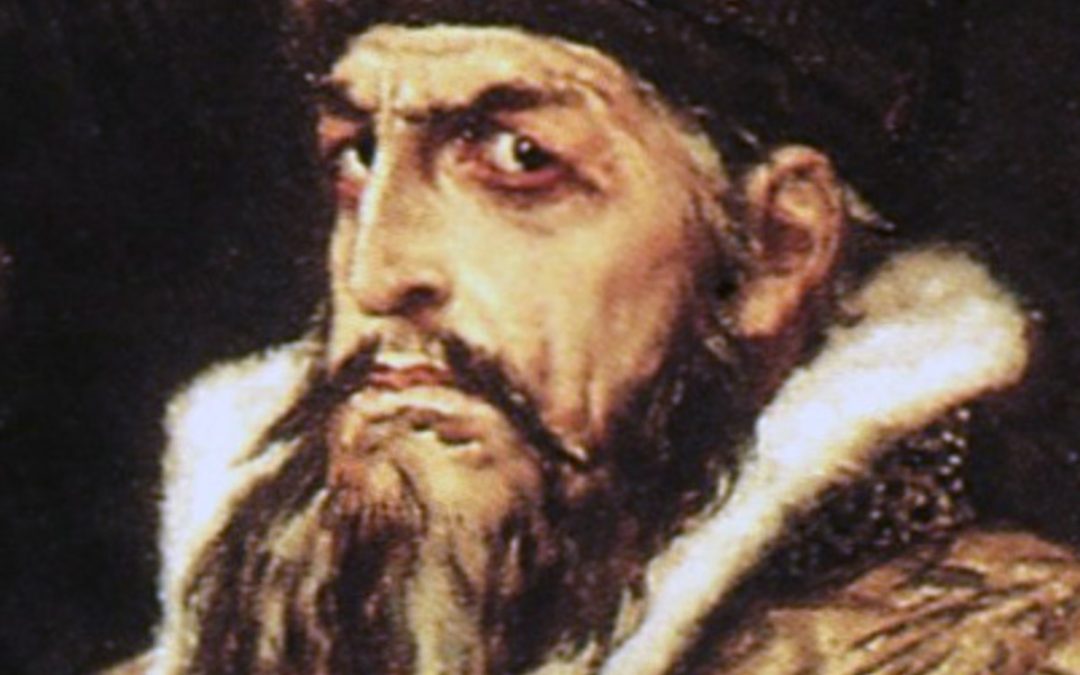
It was this era that produced such famous Russian historic names such as Prince Alexander Nevsky whose name lives on as the famous Nevsky Prospekt in St Petersburg, Prince Dmitry Donskoy and then of course Ivan IV (Ivan the Terrible or more correctly Ivan the Fearsome). By this time, Muscovy had expanded greatly into the Western part of Russia, as we know it now.
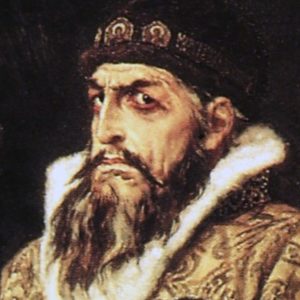 Ivan IV www.biography.com
Some of the most notable Muscovy Boyars were Boris Godunov (made into an opera), the Golitsyns and of course the Romanovs.
Second only to the Kings in power and status, what happened to the Boyars?
By 1613, the Romanovs had outmaneuvered the other Boyars in the power plays and a young, fragile and ailing teenage Mikhail of the Romanov family left his home in the country on the 13th March 1613 for Moscow. Mikhail was then crowned Michael I, Tsar of Russia. Peter the Great later abolished the Boyar system replacing it with the Western titles of Princes and Dukes.
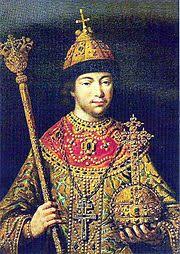 Michael I
How disturbingly coincidental then that it was another young, ailing teenager – The Tsarevich Alexei (son of Tsar Nicholas II) that closed the chapter on the Romanov dynasty when executed by the Bolsheviks on the 17th July 1918.
The Romanov’s palace built by Mikhail’s grandfather still stands in Moscow today at No. 10, Ulitsa Varvarka, not all that far from Red Square and is even open for inspection. It is known as the Chambers of the Romanovs Boyars, a fascinating historic museum with its rooms and hallways where the Romanovs lived in the 16th century.
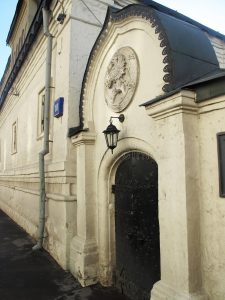
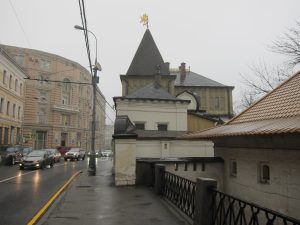
Chambers of The Romanov Boyars. Varvarka St, Moscow – Labzin Family Album
Entrance to Chambers of The Romanov Boyars. Varvarka St, Moscow at Dreamtimes.com
Reference: Simon Sebag Montefiore, 2016, The Romanovs, 1613-1918, London: Weidenfeld & Nicholson