by admin | Jun 5, 2018 | Blog
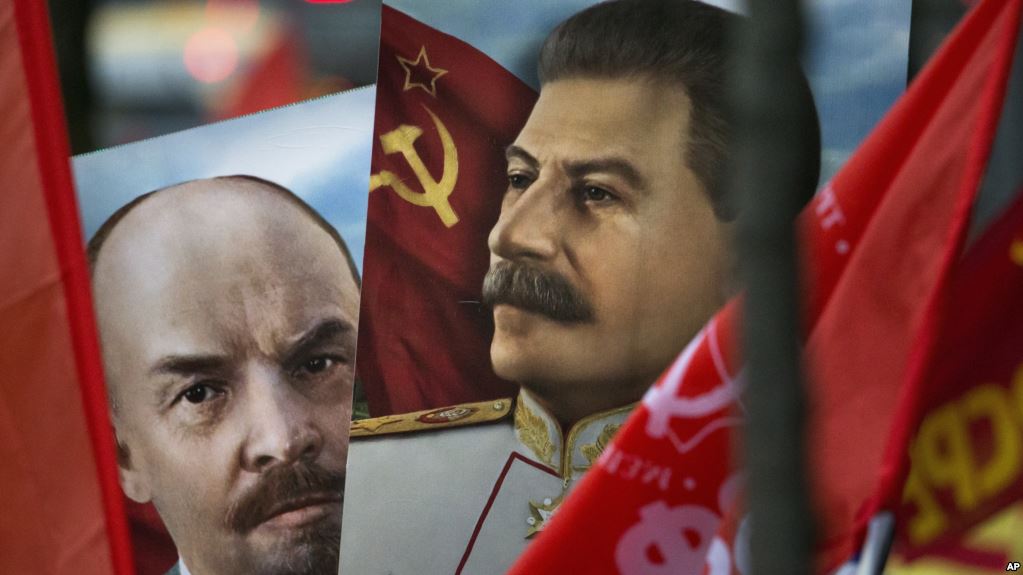
Who were the most influential characters that changed Russia forever and who met Death by Stalin as a result?
A hundred years ago, the Bolshevik government led by Vladimir Lenin was battling for survival. It seemed that the Whites were attacking from all sides and having success in doing so.
There was a White Army contingent advancing onto St Petersburg from the direction of Estonia, there was General Denikin in charge of the White Volunteer Army advancing from the south towards Moscow and there was Admiral Kolchak advancing from Siberia towards Moscow as well.
The Red Army, which had been hastily formed only a little less than a year previously, was ill disciplined, ill trained and ill equipped.
So one side looked like it had everything going for it and the other looked as if its time would be up soon.
As so often happens in history, things turn out differently to what would have been reasonably predicted.
The White Army
The Whites were confident of victory and pushed onto Moscow and St Petersburg as fast as they could, whilst the Bolsheviks, also known as the Reds, were in a state of near panic.
The Whites were, in a way, the victims of their own confidence. Their lines of supply were too stretched out, the Generals too self-indulgent!
The Red Army
The Reds on the other hand pulled out all stops to turn their situation around. Men with fresh ideas found a ready place in the Red Army. Men like Leon Trotsky (nee Bronstein) a Jew from southern Ukraine, Semyon Budyonny a cavalryman in the Russian Imperial Army, who having felt shunned there because of his family’s lack of social status meant that his prospects of promotion were limited, joined the Red Army and was instrumental in stopping Denikin’s advance to Moscow.
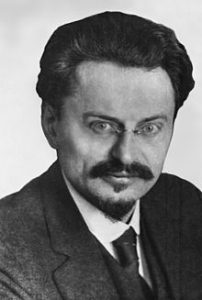 Trotsky turned the rabble Red Army into a formidable fighting machine and Budyonny continued to win battle after battle and was in time promoted to Marshall of the Soviet Union.
Meanwhile, another main player in the Bolshevik movement and the ensuing Civil War was Vasily Blyukher (later to be shot on the orders of Stalin in 1938), who was the commander of the Red Army when they stopped the White Army advance onto Blagoveshchensk in Eastern Siberia in 1921, in which Boris Labzin served on an armoured train called the Dimitry Donskoy. Then there were others such as Mikhail Tukhachevsky (later shot on the orders from Stalin in 1937), Alexander Yegorov also shot on the orders of Stalin in 1939 and Klement Voroshilov. All of whom in time reached the rank of Marshall of the Soviet Union except for Trotsky who was murdered in exile in far away Mexico by one of Stalin’s agents.
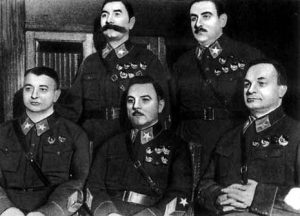 Left to right: Tukhachevsky, Budyonny,Voroshilov, Blyukher and Yegorov
On the other side of the ledger, there were the stand-out White Generals and Admirals.
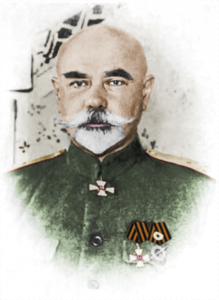 There was General Anton Denikin who never quite made it to Moscow, Admiral Kolchak who had all of Siberia in his hands but lost it to Tukhachevsky.
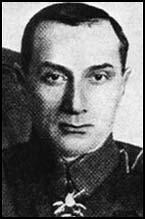 Baron Pyotr Wrangel, who was a courageous, dashing, brilliant cavalryman, led the White retreat to the Crimea and then organised a flotilla of 24 ships with their crews and 4,500 civilian refugees that sailed into exile, first to Turkey and then to Bizerte in Tunisia which was then under French rule.
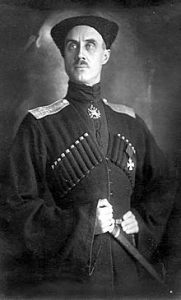
All of these White commanders went on to live in exile in Europe and the US for the remainder of their lives.
No rank of Marshall for them but on the flip side no death by Stalin either.
by admin | May 5, 2018 | Blog
Who were the Russian Boyars in the 10th century to the 17th century?
Princes by another name?
Russian Tsar Peter the Great, greatly influenced by his travels in Europe, daringly changed the antiquated Russian ruling systems one of them being the Boyars, changing their designations to the more Western royal titles of princes and dukes.
Now, with the approach of the 100 year anniversary of the execution of Tsar Nicholas and his family on the 17th July 1918, one tends to reflect on how such a spectacular and tragic demise of this family marked the end, not only of the 305 year old reign of the Romanov family, but in a broader sense the rule of the Boyars of Russia of whom the Romanovs were the most prominent and successful members.
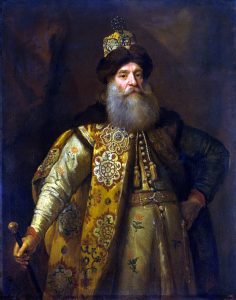
The Boyars (1682,_Hermitage)
Who were these people called The Boyars?
It all started with Rurik, a Viking prince, who established a number of principalities in what is present day Russia in 862 AD and whose lineage continued until it ended with the Tsardom of Russia and the ascension of the Romanovs in 1613.
Under the rule of the Rurikid princes, the Boyars emerged in the 11th century as the upper class of Russian medieval society with considerable political power in the first Russian Slavic state, Kievan Rus. In effect, they became the nobility and some of them became rulers of the various principalities established by Rurik and his successors.
What happened to the Boyar’s power throughout Russian history?
By the 15th century, the centre of power in Russia had moved from Kiev to the Grand Principality of Moscow (Muscovy) with the Boyars still in their position of power and effectively kingmakers.
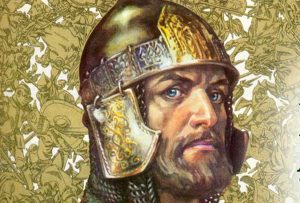 Alexander Nevsky of Russia, World History
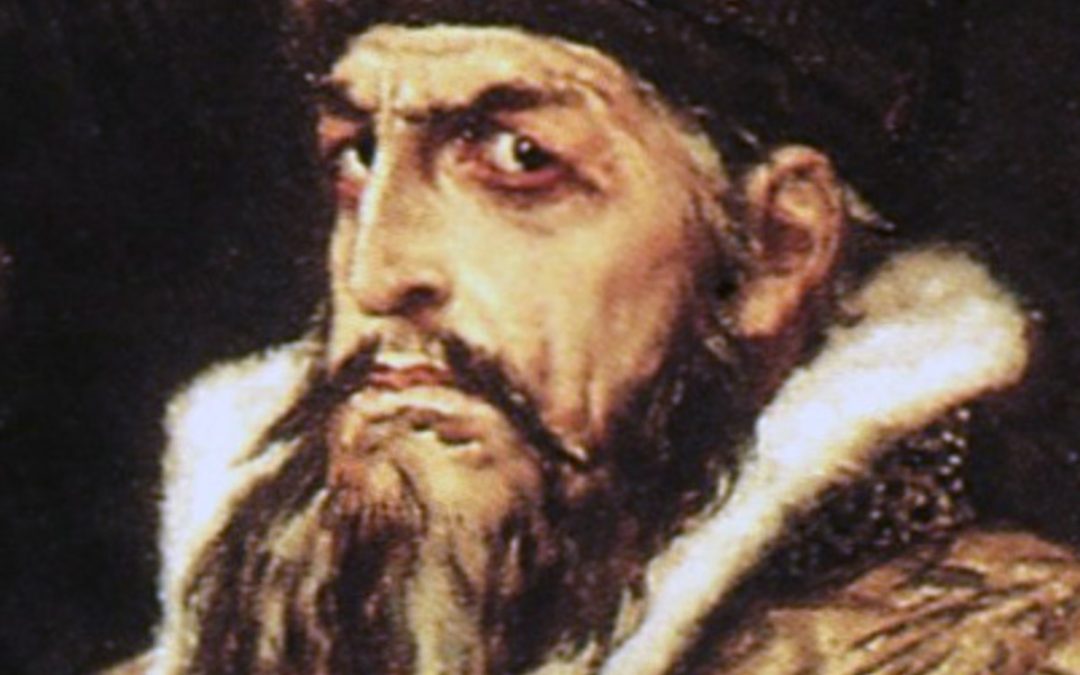
It was this era that produced such famous Russian historic names such as Prince Alexander Nevsky whose name lives on as the famous Nevsky Prospekt in St Petersburg, Prince Dmitry Donskoy and then of course Ivan IV (Ivan the Terrible or more correctly Ivan the Fearsome). By this time, Muscovy had expanded greatly into the Western part of Russia, as we know it now.
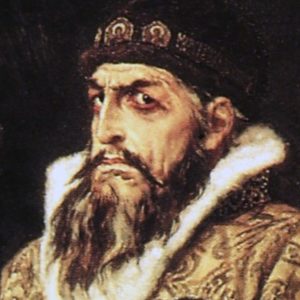 Ivan IV www.biography.com
Some of the most notable Muscovy Boyars were Boris Godunov (made into an opera), the Golitsyns and of course the Romanovs.
Second only to the Kings in power and status, what happened to the Boyars?
By 1613, the Romanovs had outmaneuvered the other Boyars in the power plays and a young, fragile and ailing teenage Mikhail of the Romanov family left his home in the country on the 13th March 1613 for Moscow. Mikhail was then crowned Michael I, Tsar of Russia. Peter the Great later abolished the Boyar system replacing it with the Western titles of Princes and Dukes.
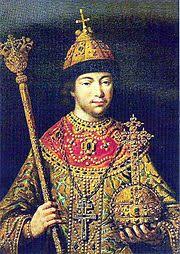 Michael I
How disturbingly coincidental then that it was another young, ailing teenager – The Tsarevich Alexei (son of Tsar Nicholas II) that closed the chapter on the Romanov dynasty when executed by the Bolsheviks on the 17th July 1918.
The Romanov’s palace built by Mikhail’s grandfather still stands in Moscow today at No. 10, Ulitsa Varvarka, not all that far from Red Square and is even open for inspection. It is known as the Chambers of the Romanovs Boyars, a fascinating historic museum with its rooms and hallways where the Romanovs lived in the 16th century.
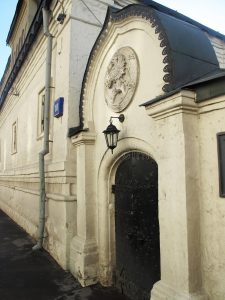
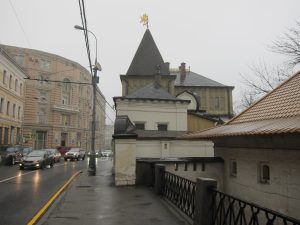
Chambers of The Romanov Boyars. Varvarka St, Moscow – Labzin Family Album
Entrance to Chambers of The Romanov Boyars. Varvarka St, Moscow at Dreamtimes.com
Reference: Simon Sebag Montefiore, 2016, The Romanovs, 1613-1918, London: Weidenfeld & Nicholson
by admin | Mar 18, 2018 | Blog
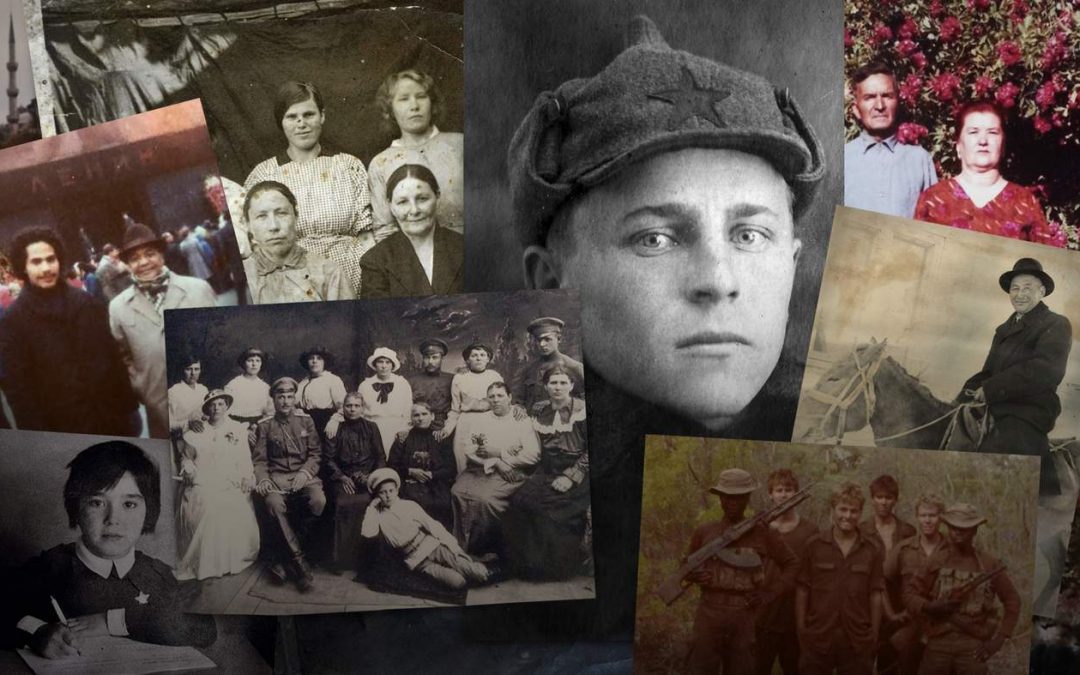
White Russian émigrés in the US, in Europe in the UK! Sure, there are plenty of them. But what about in Australia, New Zealand, Venezuela, Brazil? Who are the Russian émigrés and what is their Russian ancestry?
(Image: http://www.bbc.co.uk/news/resources/idt-sh/russian_revolution_and_me)
You may be surprised to know that almost in all corners of the world there are pieces of Russian émigrés’ history that seem to have been blown all over the world like confetti at a wedding. Many of their tales are lost forever but some survive.
Making Meaning: Russia’s Lost Émigrés
For example, in Australia there are Old Believers (Starovertsy) who came to Queensland in the early 1930’s and settled in a country town called Yarwun/Targinnie in Central Queensland and scratched out a living growing and selling paw paws (papaya). How do I know? Well when I was working as an engineer in Gladstone in Central Queensland in the 1970’s constructing wharves, we had a few guys working as carpenters and they spoke Russian and told me stories about the locals in Yarwun from where they came.
In itself, the history of the Old Believers is quite something. Just like in the Catholic Church who had a schism when Martin Luther proclaimed his demands for reform which subsequently led to the creation of the various Protestant churches, so also with the Russian Orthodox Church. However in the case of the latter, it was the reforms promulgated by Patriarch Nikon in the mid 1600’s that were resisted by parts of the church as being too radical (crossing yourself with three fingers instead of two etc.etc.) that led the Old Believers to split from the Orthodox Church.

(Image: Australian Census Demographic Map – dark green areas indicative of Russian communities)
On the other hand, there is the case of Vladimir Vasilivich Bodisco (1912 -1998) a Russian émigré who went to Venezuela via a long stint in Serbia, learned Spanish and applied his veterinary science training to breeding cows that could withstand the heat and humidity of the country to yield lots of milk. Even received a medal from the government for his efforts. If you would like to know more about Vladimir Vasilivich Bodisco’s story, you can read about it in my book (p. 152).
So if your grandparents or parents were Russian émigrés and there are old medals, swords, uniforms or photographs gathering dust, wipe off the dust and do some research. You may find a new window through which to look at their world.
The wonderful world of communications today is at your behest. Start with the usual online searches, and then search in Google in Cyrillic and a completely new world opens up!
From there you can contact the various government archives in Russia, email museums and libraries. One thing leads to another and soon you are going to bed late because you have been glued to the monitor reading captivating information that you had no idea existed before this.
By the way, the Russians seem to have a high regard for keeping accurate records in their archives and have a great fascination in what happened to their countrymen that were scattered to the four winds.
Some of the sites that I have encountered are:
Russians in Yarwun/ Targinnie
https://www.gladstoneobserver.com.au/news/apn-searching-for-the-forgotten/103024/
http://deniswright.blogspot.com.au/2011/05/white-russians-of-yarwun.html
Russians in Queensland
http://qldruscentre.com/russians.php
Russian cattle breeding in Venezuela
http://www.oac.cdlib.org/findaid/ark:/13030/kt9m3nc1r5/entire_text/
If you would like to know more about my useful resources used for tracking Russian ancestry go to RUSSIAN ANCESTRY SEARCH RESOURCES


by admin | Jan 4, 2017 | Blog
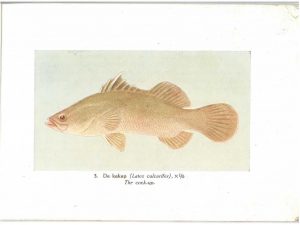
Whilst sorting old material that over the years has continued to grow slowly but steadily, I came across an aquarium booklet that was issued by the Laboratory of Marine research in Jakarta, Indonesia, in about 1955.
As many of us know, going through old things and deciding what to throw away and what to keep, is a slow, laborious and often a heart rendering experience. Sometimes it can take hours just to go through a few things, as each one of them causes the mind to relive that moment in time when that particular object was acquired and held so much significance.
So when I came across the aquarium booklet, I was transported back to 1955, when as an eight year old my father took me to see the Aquarium, which was part of the Laboratory for Marine Research in the old port of Pasar Ikan in Jakarta.
The booklet is a collection of pictures with descriptions of, what was at the time, the more common species of sea fish in Indonesia.
From its founding in 1922 until the Japanese invasion in 1941, the Aquarium with its 200,000 litre tanks and a sophisticated water filtering system was the leading edge fish research laboratory in the Dutch East Indies and arguably the world. A lot of research on the types of fish in the Indonesian archipelago was performed there and the information was used by the fishing industry.
Where is the Kakap fish now?
More than sixty years after being handed the booklet, I really take a good look through it taking me further down memory lane.
To this day still, I can relive that feeling of exhilaration that I felt when I first saw the fish in those large beautiful aquariums. I felt as fascinated looking at this underwater world as I can imagine Jacques Cousteau would have felt when he first dived overboard with a snorkel.
There is a picture of the Kakap fish (Ikan Kakap) which was “the” fish to order in a restaurant as it was considered the one with the best tasting flesh and the least number of bones, in some ways equivalent to the Australian Barramundi. Just seeing its picture conjures up memories of going to Glodok (China town in Jakarta) with my parents, grandmother, aunt and uncle, for dinner and hearing them always order the Kakap. Then shortly after, the whole grilled fish, sprinkled with chilies, chives and other succulent herbs, lying in a sweet and sour sauce on a huge platter would be served. Always tasty, always good, always a wonderful choice.
Which leads me to think of another fish that was commonly consumed in restaurants and roadside stalls, the Gourami. Unlike the Kakap fish, the Gourami fish is a fresh water fish and has more bones than the Kakap. Gourami would be on our menu only if the Kakap was unavailable.
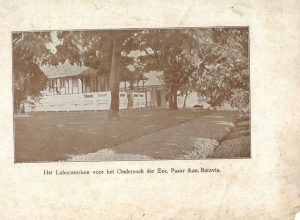
As I relive these memories, I cannot help but fast-forward my thoughts to the present. The Aquarium and the Laboratory were handed over by the Dutch to the newly formed Indonesian authorities in 1950 when Indonesia officially became independent. Soon after the Dutch scientists working there left. A few stayed on with the new Indonesian administration but then left in the 1950’s with most of them gone by 1957. What about the Aquarium and the Laboratory? What happened to it subsequent to 1957? There seems to be no information on its fate.
Where is the Kakap fish now?
As for the Kakap; I see that it is described these days as a “Snapper” rather than “The Cockup” as it was called in the English description of the fish in the Aquarium booklet. I wonder whether it is still plentiful enough to be served in restaurants. I hope so!

by admin | Sep 3, 2016 | Blog
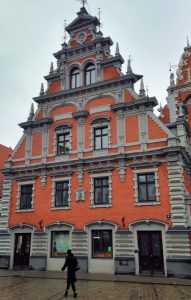
Riga, a place that until recently had been a place somewhere, not quite sure where.
And all of a sudden due to force of circumstance and a love of travel, we had just booked into an Airbnb in the main street of Riga.
1. Getting there
The journey to Riga had not been smooth sailing! We had caught a train from Tallinn to the border with Latvia and then found out that there were no connecting trains or buses, at least not for the next 15 hours to Latvia and to Riga in particular.
So we caught a taxi, for the princely sum of 100 euros from the border to Riga. The taxi driver encapsulated the dichotomy of the present day Baltic republics.
The taxi driver, a Russian, who drove us there, was entertaining as he described life from his point of view, life for Russians in the present day reality of the independent Baltic States. It all sounded a bit like the Russians were more likely to be struggling in the new reality of life in the Baltic States!
2. Staying there
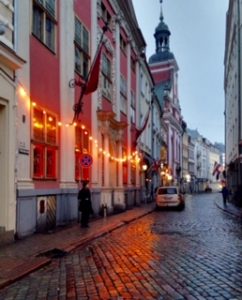
The modern, recently refurbished apartment in Riga was situated on the top floor of an old six-storey apartment building with a 1930’s era lift with manually operated closing doors that could knock you out if you didn’t jump out of the way quickly enough. The apartment was great; not only was there a spa bath, but big comfy sofas to curl up on and read and take it easy.
It was then that we realised that our stay in Riga was to be not just not another stop over. It was a brush with history, and a brush with the more violent and tragic part of history at that.
Our street, Brivibas (Freedom) Street was previously Lenin Street and before that Adolf Hitler Street and before that who knows!
Two bloodthirsty dictators and a post-communist regime had left their imprimatur on the street name and many other things!
3. The characters there
In amongst all this present day Baltic anti-Russian feeling, we meet Svetlana, one of the nearly 40% of the population that is Russian still living in the Baltic States. Svetlana is more Russian than most Russians are. Svetlana an actress, hosts the Russian programme “Radio Riga”, is the chairwoman of the local Pushkin Society and the main sustaining members of the “Society for the Restoration of the Pokrovskaya Cemetry” located not far from the centre of Riga and at one time considered “the place to be buried” in the Russian Empire.
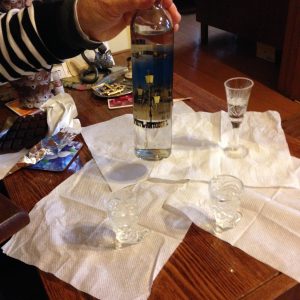
Svetlana’s life and personality is so rich that it would have seen her in one of Pushkin’s poems, had he known her. She is full of energy and drive, in touch with Russian literature and history, loves straight vodka shots, and has a keen eye for men. A true Russian woman and a connoisseur of the finer things in life.
4. Away from the main square there
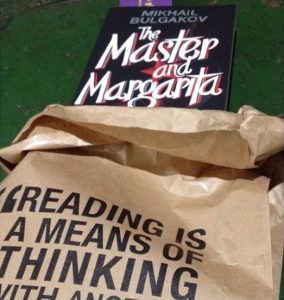
She takes us to visit the Cemetery along a street made famous, she says, by Mikhail Bulgakov in his book “The Master and Margarita”. Bulgakov was an author writing un-Soviet literary works in the days of Stalin, a not very promising literary career or for that matter, life expectancy for those times. Luckily for him he finished writing it just before he died, thereby cheating the firing squad.
Unexpectedly, his book saw the light of day in Western Europe in the 1960’s when Marianne Faithfull gave it to Mick Jagger. Jagger was so inspired that he wrote his very famous song “Sympathy for the devil” based upon it.
In the book, “The Master and Margarita” the locals say Margarita, the witch, at one point travels along the street leading to the cemetery, today called Meness Street, which means Moonlight Street, to meet her friends at the cemetery.
A strange feeling overcomes you when you are walking along the very same street to the very same cemetery to make your acquaintance with one of your ancestors. It is as if you are going back in time as a character in Bulgakov’s story.
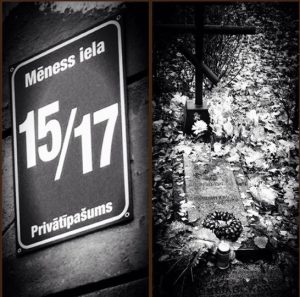
5. The fame of Meness Street there
Meness Street, for all its literary noteworthiness, is unremarkable. But its destination, the cemetery, is certainly something to behold. A home away from home to be proud of! Steeped in history and populated by famous and accomplished personages who are buried there, it would certainly be a place where one would be honoured to be laid to rest.
In a way, it is like a tidal pool on the beach that still has some water in it when the rest of the tide of history has receded. Bulgakov’s fingerprint is here too. His wife’s twin sister is buried there, as are famous Russian authors, artists and statesmen. Stories abound about its famous people: the Russian author Mintslov who insisted upon being lowered into his grave through a web of pine tree branches with his final instruction to do it as “I will be watching you”; one of the last Metropolitans of the Russian Orthodox Church, tragically killed and whose remains are buried in the ornate chapel. So the story goes, when his body was exhumed a number of years after being initially buried in a grave, to be transferred to the dedicated Chapel, none of his body parts had disintegrates. A sign of saintliness and holiness!
And so as we extricate ourselves from the time travel that the excursion to the Cemetery represents, drink vodka with Svetlana and wander off through the back streets to the huge markets adjacent to the old wharves. The exoticness is captivating and mouth-watering at the same time. Fish from the Baltic, caviar, sausages and meats that are worth sacrificing your health for, are a must.
All in all, Riga and for that matter the Baltic States of Estonia, Latvia and Lithuania are priceless gems that should definitely be on everyone’s to-do list.
Whether overlooking Tallinn in Estonia, whilst munching on their speciality of almonds roasted with sugar, cinnamon and cloves in a red-hot brazier by the side of the street or having breakfast for two for six euros in Vilnius in Lithuania, these countries are a must to visit.